Monday, December 24, 2007

What, You Were Expecting Poinsettias?


Ha, ha! The title was our little holiday joke. No, of course, these are not poinsettias. These are flowers from a floribunda rose called "Paul Ecke, Jr." However, there is a poinsettia connection.

Paul Ecke, Sr. was the guy who first got the notion, back in the 1920s, to cultivate and hybridize a wild, winter-blooming plant from Mexico. Paul Ecke, Jr. later took over the family business and got the notion to market the plant in association with the Christmas holiday. The Paul Ecke Ranch is still the primary producer of poinsettias. More information on the history of their operation is available on the Ranch's web site.

Back to the little floribunda: the scentless flowers are striking in that the centers are a glowing orange-red color which darkens to red at the edges of the petals. This specimen is a bit leggy, but we hope to correct that when we begin pruning next month.

Reminder: bareroot season is upon us and, depending on your local weather conditions, pruning season is imminent.

Good gardening to all, and to all a good night!


P.S. to Gene: Our garden is a damned jungle, which is why we never post wide angle shots. ;-)

Wednesday, December 05, 2007

She's No Lily


Fortnight Lily aka Butterfly Iris aka African Iris. Possibly Dietes iridioides; more likely Dietes grandiflora.

Sunday, June 17, 2007

Who Loves Ya, Baby? [Updated 8-30-07]


Apologies to our fan(s) for the long wait. We had the best of intentions to update this post ages ago with information on the rose pictured. The internet is usually quite helpful in searches for pesky details we don't bother to memorize or occasionally fail to record -- in this instance, class name -- but not this time.

This is a hybrid tea rose called Tuxedo. Our personal characterization of the color is "deep, velvet red." The petals are dark red and have a velvety sheen which does not come across in a photograph. This would be our top pick for the title Perfect Rose, but (alas, alas) it has no scent. When grown in full sun, the petals tend to stay partially furled, giving the flower a compact, multi-pointed star appearance. In partial shade, the petals relax and open more fully.

So, what's the big mystery? We searched and searched, both online and in our own rose encyclopedias and guides, but nowhere was this rose mentioned. This evening, however, we at long last got a hit. The hybridizer who bred it, Jack E. Christensen, mentions it on his web page. It turns out that this rose variety is no longer sold. (Pity.) If anybody else is growing it, they're not talking about it on the 'net.


Monday, April 02, 2007

Keep It Gay!


Here's a birthday dedication to GRT. In his honor, we post an entire page of purples, but this one takes the [birthday] cake.

This is a passion vine (passiflora) of a variety called "Whirligig." With multiple shades of purple and the squiggly-ended filaments radiating from the center, this is just about the gayest flower we've ever seen. And we mean that in a good way. Enjoy!

Cape Angels


Lilac Time


The Princess Flower

Name That Bromeliad [Updated 2-14-08]


No joke. If you recognize this Bromeliad variety, please ring in and let us know what it is. A family member acquired the unlabeled parent plant from a seller at the old Farmer's Market in Los Angeles and was kind enough to gift us with a couple of "pups" when the parent outgrew its pot.

The plant has large, strappy, floppy leaves edged with spines. A spike, tipped with a multitude of the long-lasting, dark purple flowers pictured, develops once per year. The flowers ooze a clear sap beloved by ants.

Know what it's called? Please enlighten us all.

Enigmatic Purple


Fans of this blog know we have it bad for red - love it, love it, love it! Occasionally, though, we have a little fling on the side with purple. Purple is red's enigmatic cousin. Is he straight? Is he gay? (We like to think he's bi.) Who cares? Whether you like it dark and broody or lighthearted and lavender, purple has you covered.

Here's a plant that combines both. Tradescantia pallida purpurea aka Setcreasea pallida 'Purple Heart.' Dark purple foliage; light purple flowers. Stems are very tender and susceptible to breakage, but stick any broken off bits in a pot of planting mix and they root very easily. Voila! More plants!

Monday, March 19, 2007

Sunday, February 04, 2007

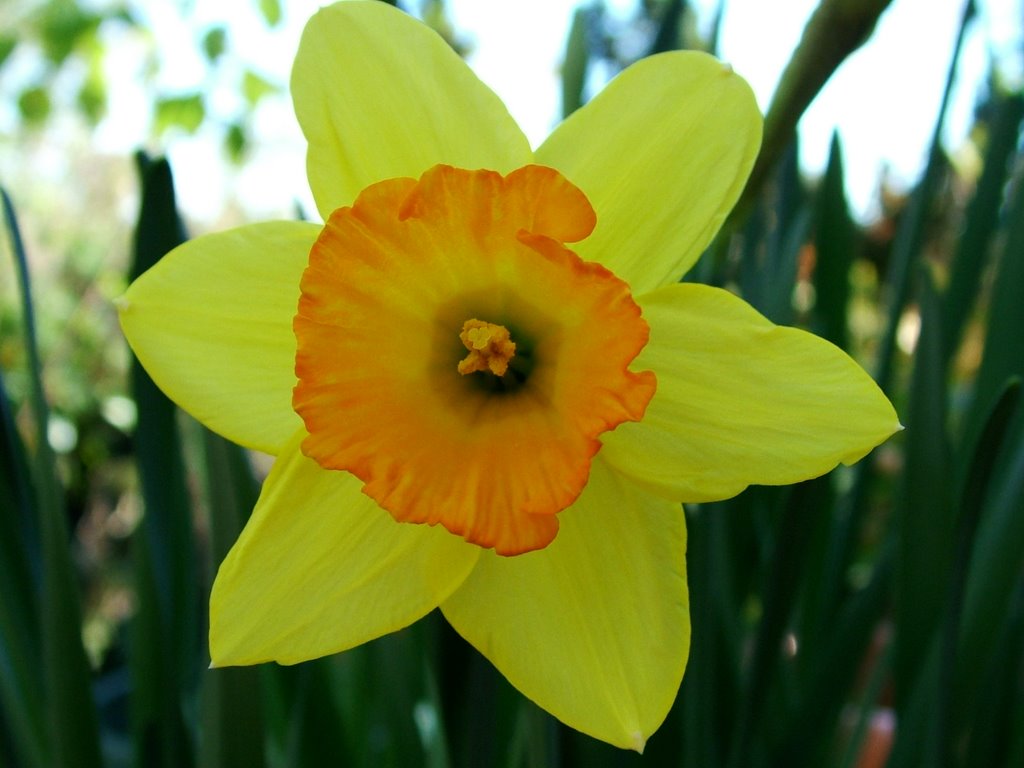
Too Soon for Daffydills?


A reader comments that his daffodils are in bloom and asks if this is early. For most parts of the country, it is nowhere near spring, so blooms in February would be considered early (if not impossible).

However, here in California, where conditions tend to defy the official seasonal calendar, the answer is: it depends. First, it depends upon the weather, which just recently has ranged from bitterly cold and dry to cool and briefly wet, and then on to hot and sunny. So, it's no surprise if some plants think spring has sprung.

Next, it depends on the bulb. Even among narcissi, each variety has its own timetable. For example, our paperwhites bloomed a month ago or so and are now done. The daffodils are just starting to bud and flower. Yet another variety--a mini daffodil--has sprouted but shows no sign of buds yet.

Our advice: enjoy the preview of spring while it lasts.

Monday, January 29, 2007

Accidental Art

We've taken a bit of chaff from our small-but-feisty fan base [hi, GRT!] for the long intervals between posts. Yes, we could post more if mediocre photos (we have hundreds) with little or no commentary would do, but where's the fun in that?

Recently, a friend from work [hi, Kate!] advised that she had shown this blog to another friend [hi, Kate's friend!] who also gardens and photographs flowers. We basked momentarily in their compliments, and then hastened to state that there is no skill involved here and the results displayed are entirely accidental. Although we are not too sure about that business concerning the monkey given a typewriter eventually writing Hamlet, we know from personal experience that any fool with enough patience and a digital camera tricked out with a good macro lens will eventually take a decent picture.

This is what we do. We take a lot of pictures from different angles and distances, unload them from the camera onto the computer, then look them over and hope for at least one good shot. The advent of digital has meant we are more often satisfied than disappointed with the results. Occasionally, however, we are surprised. Which brings us to this shot.


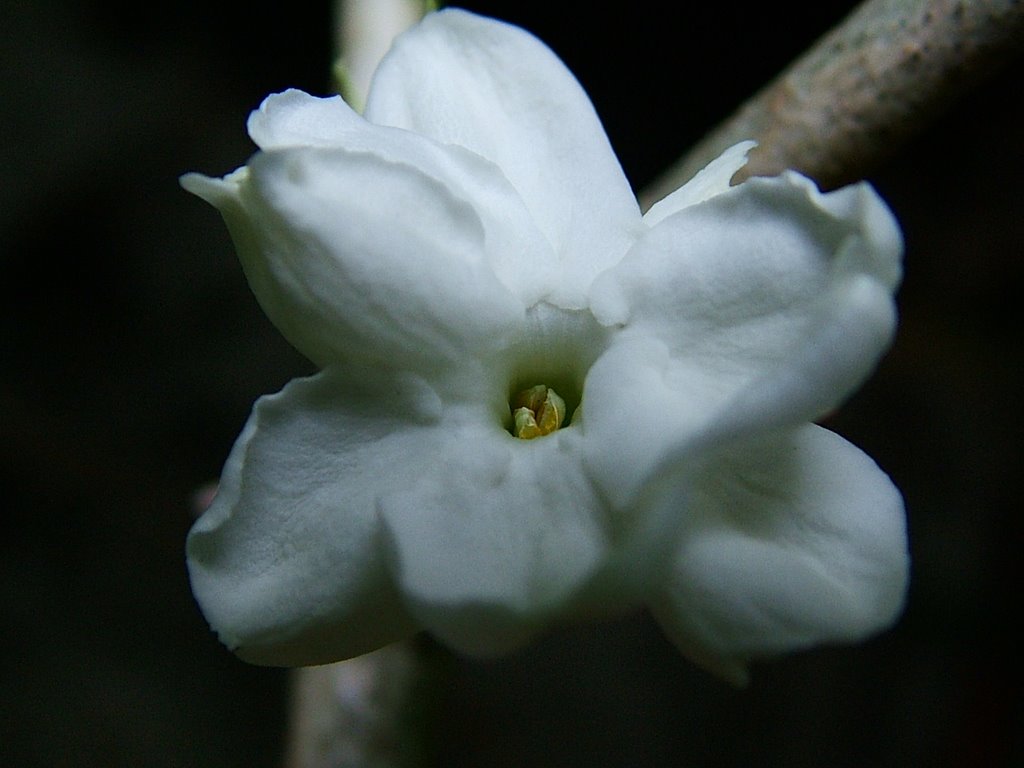
This is a flower from Arabian Jasmine (Jasminum sambac), a rambling vine. The flowers are quite small--a bit bigger than a pencil eraser--but produce an intense scent which just manages to stay on the good side of that fine line between fragrant and stinky.

This is a "lucky shot." Art by accident, not design. The only skill involved was in picking this one picture from a group of others.

Nevertheless, we are very proud of it.

Friday, November 24, 2006

What's In a [Common] Name?


Little of truth, in this case. This is the flower from a corm (like a bulb, but not) sold under the name Peacock Orchid. It's no orchid; it's a gladiolus - gladiolus callianthus 'Murielae.' As for the peacock part - okay, maybe if you look at it upside down ...

Something Blue


Blue ... we're just not that into it.

In fact, this may be the only blue flower on the property (excepting some preexisting, unidentified ground cover in the backyard).

Salvia guaranitica, variety "Black & Blue Sage."

It's black, and it's blue. And that's about all we've got to say about it.

Want Hummingbirds?


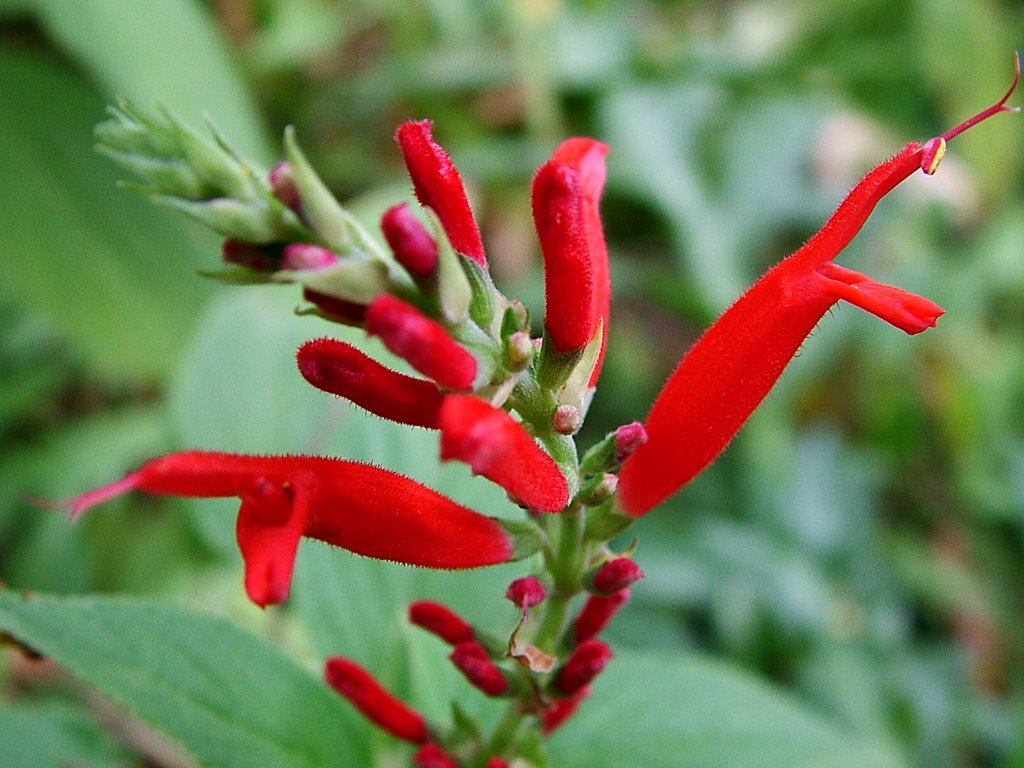
Then plant this: Salvia elegans aka pineapple sage. Hardy once established. Cuttings root easily. Hummingbirds love it. And it really does smell a bit like pineapple.

Thursday, November 23, 2006

Mum's the Word


Chrysanthemum lore has it that a shock to the roots (such as transplanting) can alter the color of subsequently produced flowers. It may be so. Flowers from this specimen, rescued from an office trash bin, were once a darker shade of rust, and more red than orange.

Wednesday, October 18, 2006

Thumbs Not Always Green

Just to demonstrate that not everything we touch thrives, here is the case of a plant variety we've been unable to grow successfully.


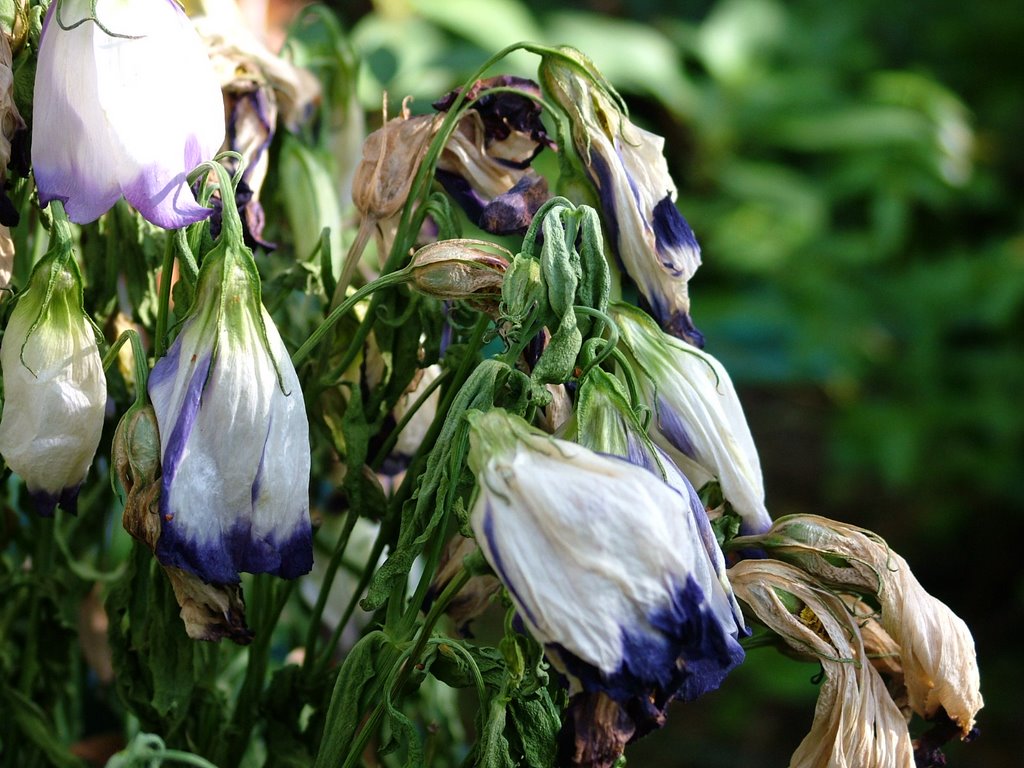
Meet Eustoma grandiflorum aka Lisianthus russellianus - fresh from the store, but slightly wilty from the trip home, followed by a thorough watering.


Now see her a week after transplanting. She just went into a sulk and died.

They die if you don't water them enough.

They die if you water them too much.

They die if you don't transplant them.

They die if you do transplant them.

Hot, cool, sunny, shady - dead, dead, dead, dead.

But we haven't given up. Oh, no. If necessary, we'll get Barbra Streisand to sing over one a la On A Clear Day You Can See Forever.

Someday, this plant will live for us. It may even set seed.

Monday, September 04, 2006

The White Album

Before Labor Day 2006 passes into history and summer whites must be put away, here, in no particular order, are some white flowers which appeared in our garden over the last few months.


Image 1 - Rosa Banksiae aka Lady Banks' Rose (white variety). Small, nearly scentless blooms appear once or twice a year. It does not merely climb or ramble; it's a rover which has shot up a stone wall and over a wooden fence into a neighbor's yard. We believe an elderly specimen of this rose variety--the canes twisted and gnarled together in a tree shape--resided in mother's garden at the Old House. Years later, we discovered a subsequent owner of the property removed the "tree." Pity.


Image 2 - Viburnum. This came from the garden center as a brown stick in bareroot packaging. The label described the variety as a "snowball" type. We waited years and years for snowballs. At last, this year, we got flowers, but no "snowballs." The grower's mixup again. This is a lacecap variety. We like it well enough, but next time we go shopping for snowballs, we'll have to see them in bloom before we plunk down our hard-earned dough.


Image 3 - You Say Rose of Sharon, I Say Hibiscus. Hibiscus syriacus aka Rose of Sharon. Deciduous (i.e., dies back to a big brown stick in winter); kept us guessing whether we would see any flowers this year. Once in a while, the grower's goof works in your favor. We bought a 5 gallon pot containing what we thought was a multi-trunked shrub of a lavender variety. In the process of repotting, we found three different plants had been potted up together: one lavender, one pink and one white. Probably the best deal we've ever gotten on a purchase from the big box home improvement store which shall not be named.


Image 4 - Plumbago auriculata aka Cape Plumbago. Why plumbago? We can't recall. (A mind is a terrible thing to waste ...)


Image 5 - Azalea (miniature form), a sub-species of rhododendron. Given that there are roughly 800 species and 10,000 varieties in the rhododendron family, we very much wish we had not misplaced the plant tag for this little guy.


Image 6 - It's a Hard Knock Life for a Shamrock Flower. Yes, yes, we should have had this for St. Patrick's Day, but it wasn't flowering then! We have no interesting story about this particular flower. However, long, long ago, while searching for something in the patch of clover beneath our bedroom window at the Old House, we found a four-leaf clover. We plucked it, pressed it in wax paper and carried it for years until it mysteriously vanished. Perhaps the leprechauns took it back.

Sunday, July 30, 2006

Taking a Break ...


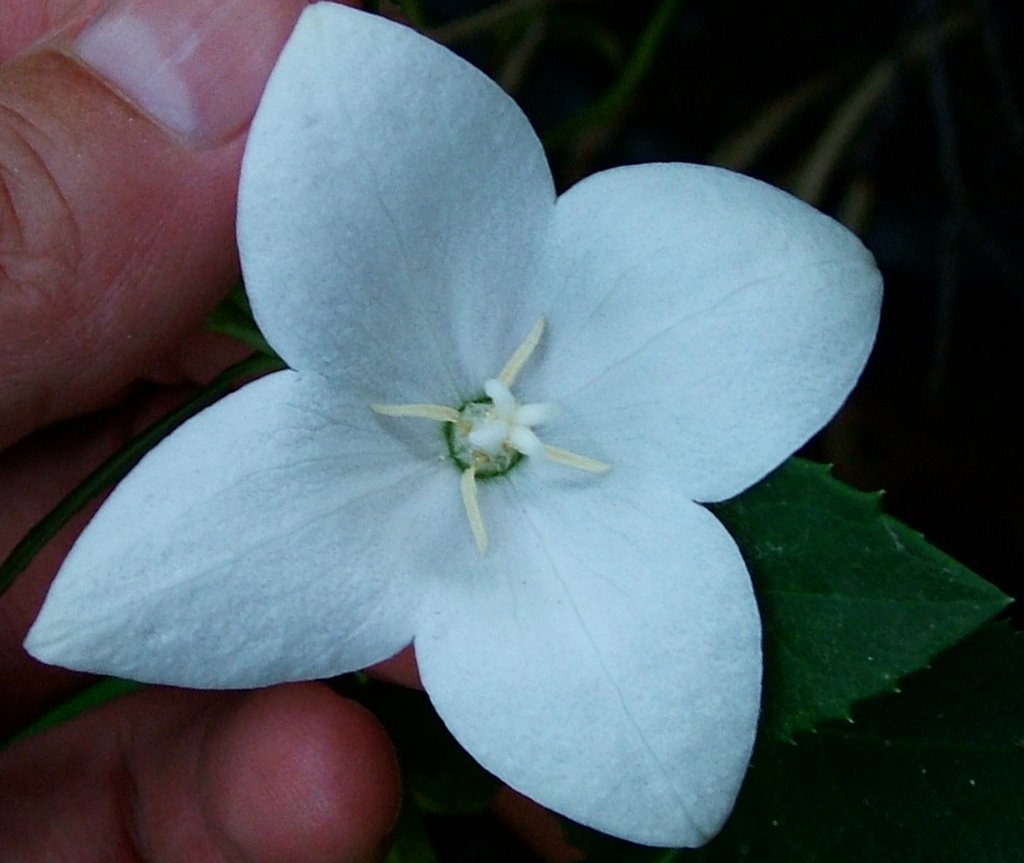
... from red for a moment, here's a Platycodon Grandiflorus aka Balloon Flower. Unfortunately, we did not get a shot of the "balloon" stage, which occurs right before the flower bud opens. [Yes, yes, it looks just like a little white balloon, not much bigger than the tip of a finger. Yawn.] But check out the smooth, white simplicity of the open flower.

Tuesday, June 27, 2006

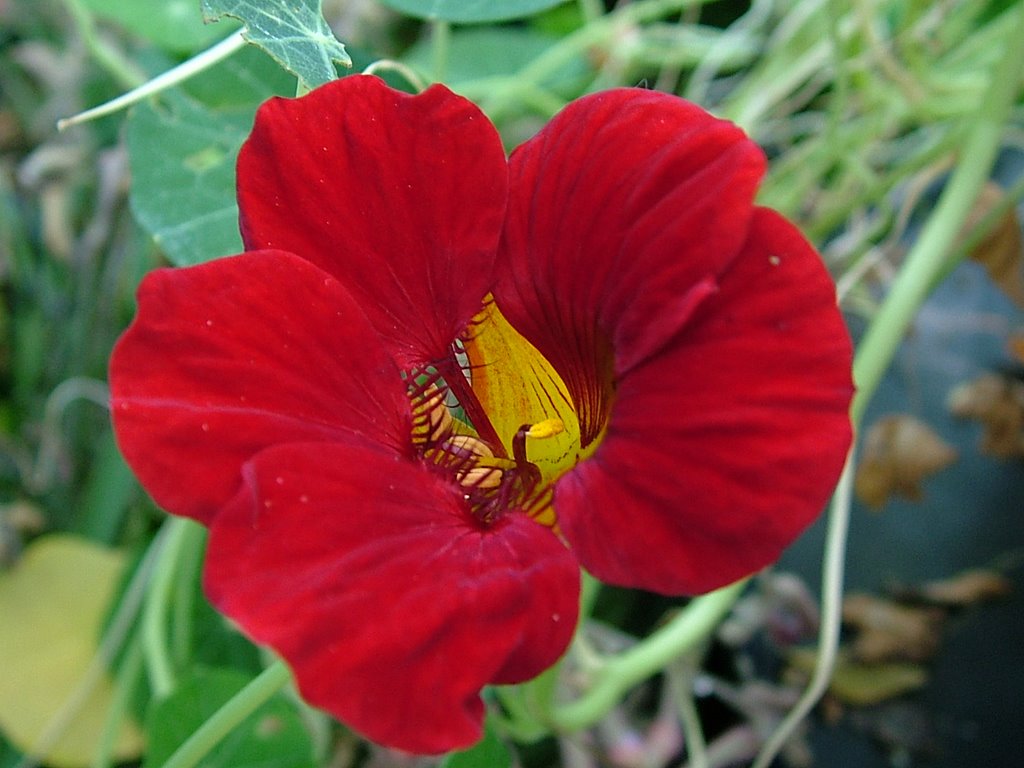
The Holy Grail ... of Nasturtiums


At last! A red one!

Mahogany Velvet. We found the seeds at Target (of all places). When we went back for more, they were sold out. [Boo hoo.]

The color of the actual flower (fresh blood red) looks nothing like what was pictured on the seed packet (maroonish, dried blood red), but we aren't complaining.

Red, red flowers; happy, happy, happy!