Wednesday, April 02, 2014
Sunday, June 16, 2013
Tuesday, April 02, 2013
Sunday, June 17, 2012
Mystery Flower Identified! [updated 4-28-13]
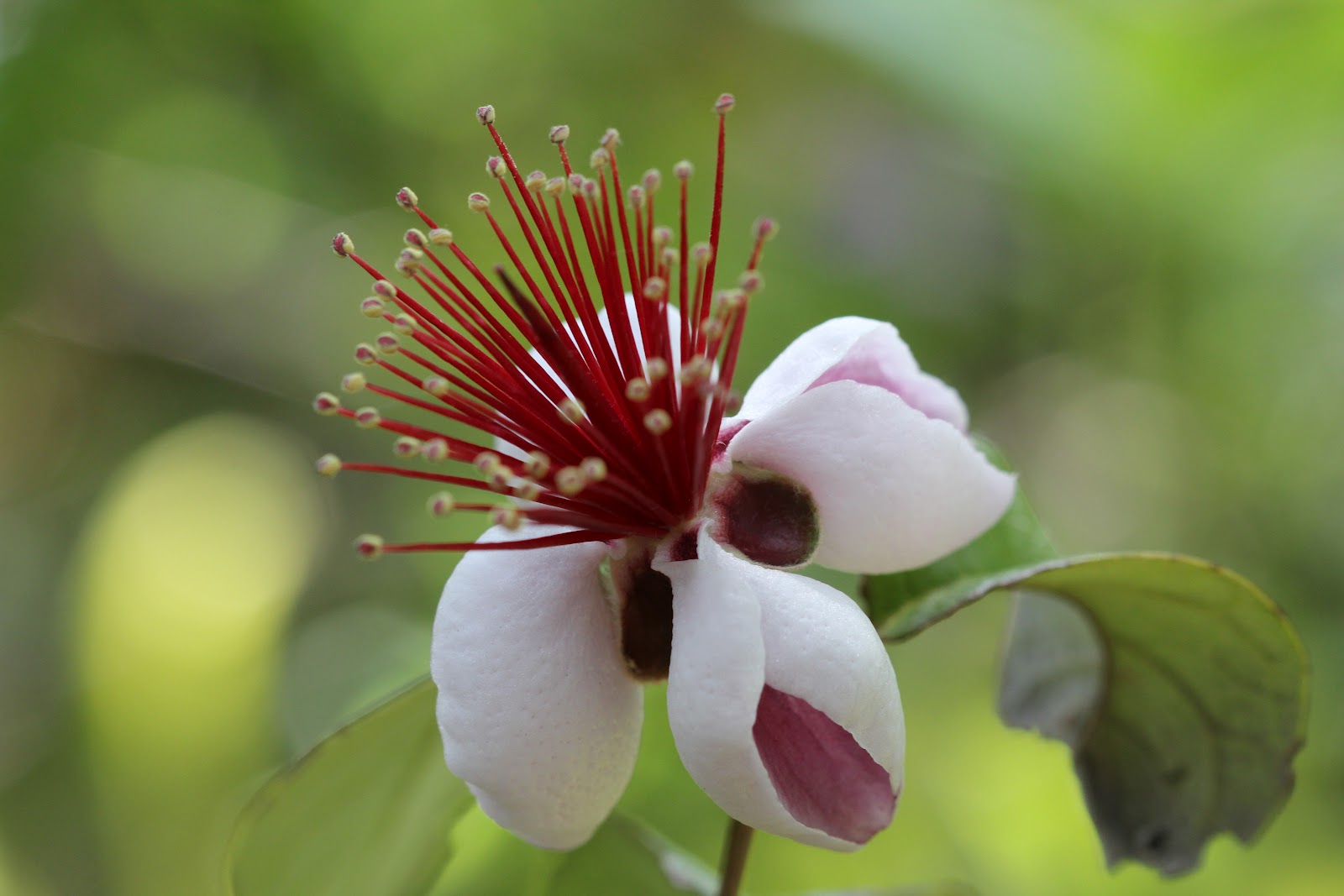
Pineapple guava (Acca sellowiana aka Feijoa sellowiana). Has produced two flowers, but no fruit (yet).
Monday, April 02, 2012
Red Flower Day
Sunday, April 01, 2012
Spring Fail
Saturday, March 17, 2012
Hands-Free Spring Success
No skill required to grow this. Sooner or later, it finds its way into most gardens without human assistance and thrives easily with a bit of sun and water run-off from the irrigation of other plants. Bees visit it and the roots fix nitrogen in the soil, which can benefit other plants.
When I was a child, I found a stem of clover in my mother's garden bearing the legendarily lucky four leaves. I pressed it and carried it in a waxed paper envelope in my wallet for several years until the wallet was lost. It didn't seem so lucky then.
Sunday, June 19, 2011
Sunday, April 04, 2010
Sunday, September 20, 2009
Conversation Piece [Updated 4-4-10]
This is a protea. Although one may find the cut flowers gracing arrangements from the florist, it is unusual to find a growing plant for sale. So, when we saw this one at our local Trader Joe's, we had to have it. Visible through the back window of the car as we completed our shopping, it caused many people to stop, peer at it and speculate on what it might be.
A month after these photos were taken, the plant was dead. Our primary mistake was disturbing the rootball when the plant was moved to a larger pot. (For those interested in learning more about the care of proteas, here is a good source we discovered after the fact.)
The lessons from this experience are (1) do not assume the care instructions on a plant label are complete (or even correct), and (2) do research the care and cultivation of any plant you bring home--do it as soon as you get home. Why else do we have the internet?
Thursday, April 02, 2009
X-Flowers
This is a variety of pelargonium commonly known as Martha Washington (or Lady Washington) Geraniums; in the UK, they are called Regal Pelargoniums. (Go figure.)
The label for this plant with the solid maroon flowers is open to debate. It is also a pelargonium. We suspect it is a mutation of the plant with the white-edged flowers or, perhaps more accurately, it is a reversion to the form of the parent plant from which the white-edged mutation was produced.
Too confusing? Try this then: plants grown from cuttings = clones of the parent plant; plants grown from seeds = anything goes.
Saturday, February 07, 2009
Tuesday, August 05, 2008
Is This Cool or What? [Updated 12-26-08]
And here's how it was done:
6 Watt Solar Panel (back)
6 Watt Solar Panel (front)
Connect the solar panel to a solar-powered water pump, put the pump into the pond, position the panel for maximum light exposure, et voila!
It was good, clean solar fun -- while it worked. Unfortunately, after a couple of weeks, it suddenly stopped working. At first, we thought the panel had gone bad in storage (it was several years old).
Then we began to suspect sabotage.
Sunday, July 27, 2008
... Others Not So Much
While daylilies may shrug off hot weather, fuchsias have an entirely different response: generally, they curl up and die.
Fuchsia bud

In flower.


Fruiting -- or seeding. Maybe both.

Fuchsias can be grown in hot, dry climates with certain precautions:
First, make sure that specimens kept in containers have sufficient room for the roots to spread. A pot-bound plant should be moved into a larger pot. Keep an inch or more of soil between the rootball and the wall of the pot. Plastic pots trump the clay ones, in this instance.
Second, water regularly and keep the soil moist. You can mist the foliage too, but the roots must have consistent water, especially when the weather is hot and dry. As we learned the hard way, even a few hours' delay in applying water to these plants can be lethal in summer. A layer of mulch will help the soil retain moisture, but it's no substitute for regular water.
Third, give them some shade. Even varieties marketed as being able to take full sun will have an easier time in partial or full shade.
Fuchsia bud
In flower.
Fruiting -- or seeding. Maybe both.
Fuchsias can be grown in hot, dry climates with certain precautions:
First, make sure that specimens kept in containers have sufficient room for the roots to spread. A pot-bound plant should be moved into a larger pot. Keep an inch or more of soil between the rootball and the wall of the pot. Plastic pots trump the clay ones, in this instance.
Second, water regularly and keep the soil moist. You can mist the foliage too, but the roots must have consistent water, especially when the weather is hot and dry. As we learned the hard way, even a few hours' delay in applying water to these plants can be lethal in summer. A layer of mulch will help the soil retain moisture, but it's no substitute for regular water.
Third, give them some shade. Even varieties marketed as being able to take full sun will have an easier time in partial or full shade.
Saturday, June 21, 2008
Some Like It Hot
Daylilies (Hemerocallis) certainly don't mind the heat. They stand tall in temperatures that leave other perennials wilting. True to the name, each flower produced lasts for only one day; however, a single stem can carry multiple blooms which open successively. The American Hemerocallis Society's web site contains an excellent FAQ page for those interested in learning more.

Hemerocallis (Daylily), unidentified.

Hemerocallis (Daylily), possibly "Frankly Scarlett."

Hemerocallis (Daylily), unidentified.

Hemerocallis (Daylily), possibly "Vino Di Notte."
Hybridizers have developed an incredible array of colors, shapes, textures and (in a few cases) scent in these flowers -- which makes it all the more odd that the average garden center carries only two or three varieties, usually in shades of yellow, pale orange or apricot. The yellow one will be "Stella De Oro."
For those interested in something other than yellow, the best bets are independent local nurseries or mail order/internet/eBay. You can pay a little ($5 per fan division) or you can pay a lot (don't ask). We advise against paying "don't ask" prices for something you have not seen blooming with your own eyes.
Hemerocallis (Daylily), unidentified.
Hemerocallis (Daylily), possibly "Frankly Scarlett."
Hemerocallis (Daylily), unidentified.
Hemerocallis (Daylily), possibly "Vino Di Notte."
Hybridizers have developed an incredible array of colors, shapes, textures and (in a few cases) scent in these flowers -- which makes it all the more odd that the average garden center carries only two or three varieties, usually in shades of yellow, pale orange or apricot. The yellow one will be "Stella De Oro."
For those interested in something other than yellow, the best bets are independent local nurseries or mail order/internet/eBay. You can pay a little ($5 per fan division) or you can pay a lot (don't ask). We advise against paying "don't ask" prices for something you have not seen blooming with your own eyes.
Wednesday, April 02, 2008
A Dozen (or So) Red Roses
Labels:
Beloved,
Black Cherry,
Opening Night,
Proud Land,
Rosa,
Rose,
Taboo
Subscribe to:
Posts (Atom)